Karbala.
A city of two shrines.
Holiest ground in the south, and a working city of some 800,000 people.
Two shrines in the middle, an old city around them, and desert on every side.
32.617° N,
44.033° E.
IRAQ.
SHRINES.
OLD CITY.
DESERT.
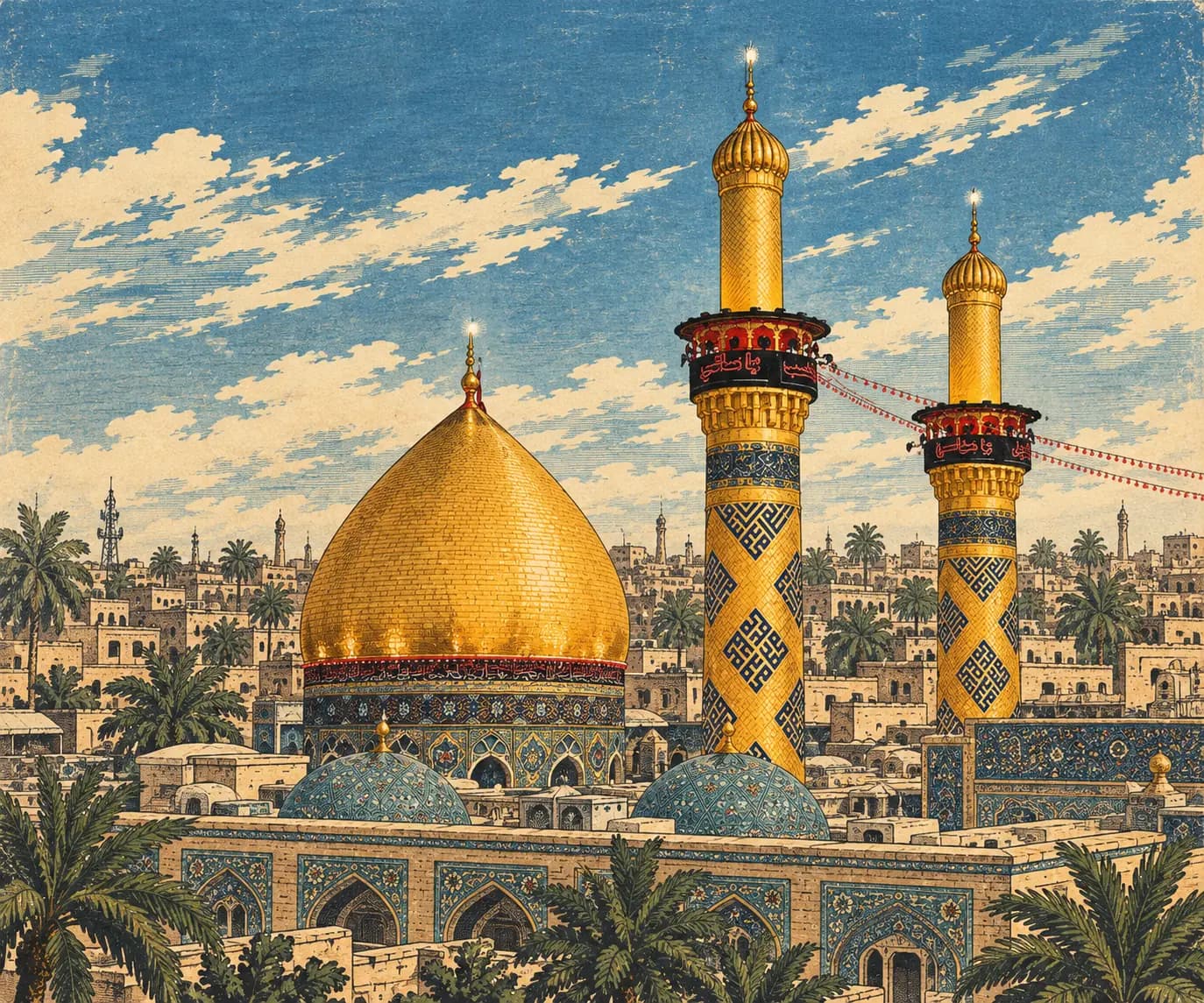
THE CITY
First a battlefield.
Then a city.
In 680 CE Husayn ibn Ali was killed here with his family and companions, at a place called al-Taff.
The town that grew over the grave is now the second city of central Iraq.
From al-Taff to Karbala
The battle was fought on 10 Muharram 61 — October 680 — between Husayn ibn Ali, grandson of the Prophet, and an army sent by the Umayyad governor of Kufa. Husayn's party was small and it was destroyed in a morning. The dead were buried where they fell, on a rise of dry ground west of the Euphrates.
A city followed the grave. A shrine was raised and rebuilt across the centuries — the Abbasid caliph al-Mutawakkil had it demolished, and it was raised again. Under the Buyids came the first city wall and its bazaars, in 982; from the Safavid and Qajar centuries onward, Persian pilgrims and scholars settled here in numbers, and the religious seminaries that grew up beside the shrines are still the reason many of Karbala's families are here.
That history explains the shape of the place. Between the two shrines runs the street the city calls Bayn al-Haramayn, and around it sits a closed, walkable centre with no cars inside a 1.5 km ring. Everything else — the bazaars, the husayniyyas, the hotels — is arranged by its distance from those few hundred metres, and for two months of the year, around Muharram and Arbaeen, they hold one of the largest annual gatherings anywhere.
The grave came first. The city is what followed.
AT A GLANCE
- Governorate
- Karbala, central Iraq
- Settled
- 690 CE — the city grew up after the battle of 680
- Population
- About 800,000 (2024 census)
- Elevation
- 28 m above sea level
- Distance
- About 90 km south-west of Baghdad, 80 km north of Najaf
- Water
- A few kilometres east of Lake Milh (al-Razzaza)
- Getting there
- No airport yet — arrive by road, or on the Baghdad–Basra rail line
- The centre
- No cars inside a 1.5 km ring around the two shrines
- Season
- October to April. July and August run past 45 °C.
- Busiest
- Arbaeen, forty days after Ashura, when pilgrims walk in from Najaf
TYPES OF TOURISM
Five facets of
one holy city.
Beyond spiritual pilgrimage, Karbala is a vibrant nexus of antiquity,
world-class healthcare, deep scholarship, and desert nature.
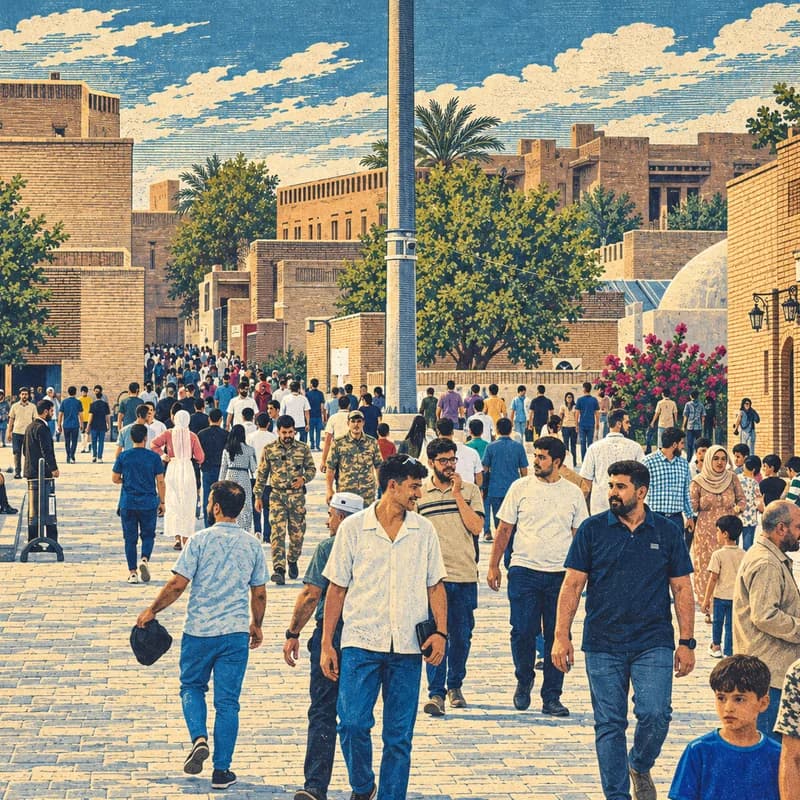
Religious Tourism
The spiritual heart of Karbala, centered on the holy shrines of Imam Husayn and Al-Abbas, Bayn al-Haramayn, and the sacred Arbaeen journey welcoming millions of pilgrims annually.
Archaeological Tourism
Echoes of deep antiquity: the monumental Abbasid fortress of Al-Ukhaidir, the fifth-century Al-Aqiser Church, Simeon Palace, and prehistoric Tar Caves.
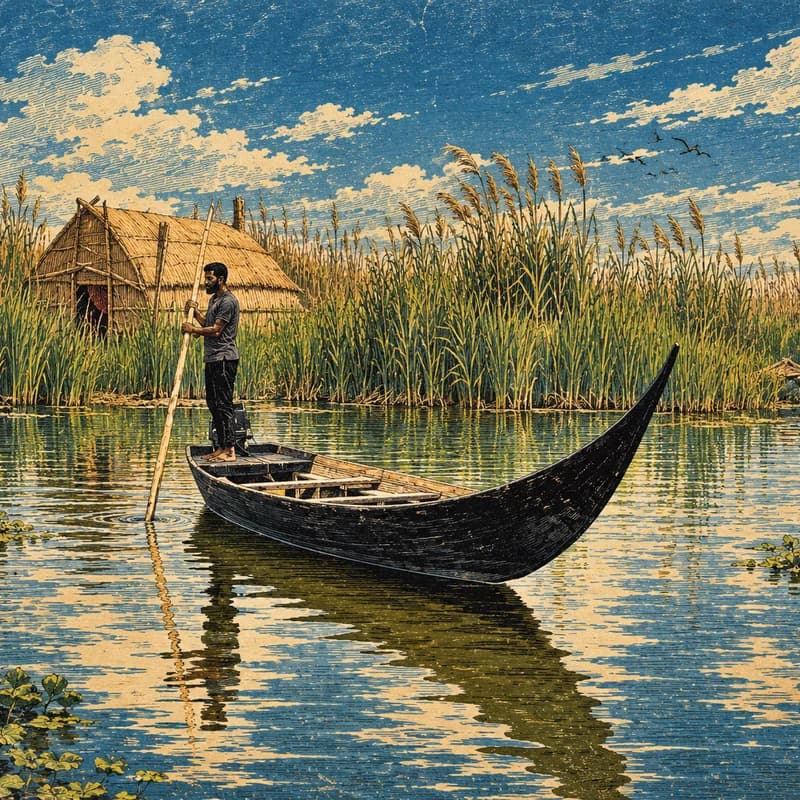
Natural Tourism
Desert waters and serene oases: the vast expanse of Lake Razzaza (Milh), the bubbling sulfur springs of Ayn al-Tamr, and date groves on the desert verge.
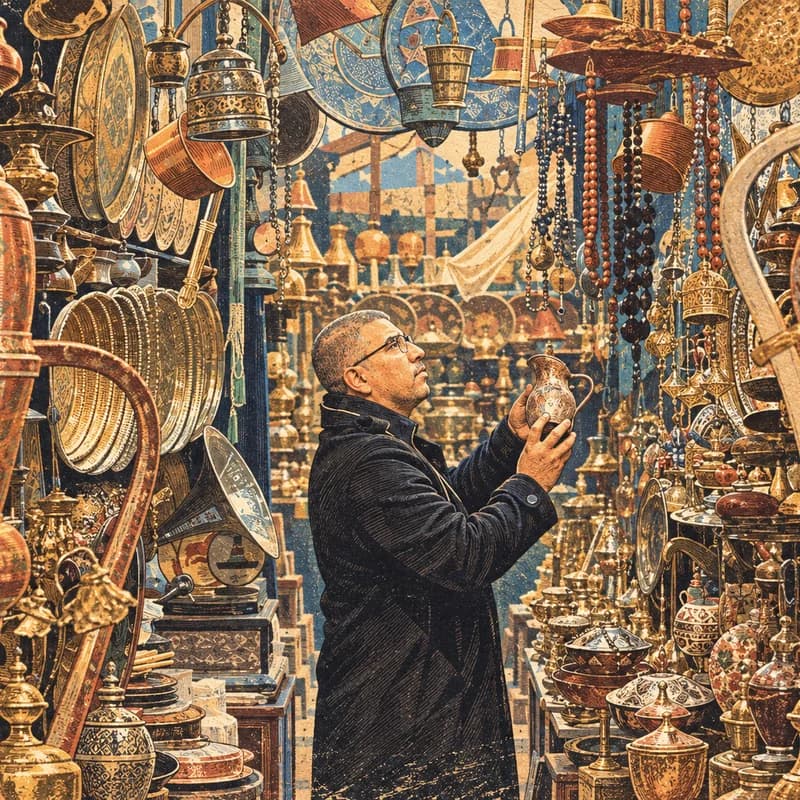
Educational Tourism
Centuries of intellectual legacy, from the venerable Hawza religious seminaries and historic archives to Warith Al-Anbiyaa University and modern academic symposiums.
Medical Tourism
A premier medical hub in Iraq: advanced specialized medicine, oncology, and surgical centers at Warith International Foundation and Al-Kafeel Super Speciality Hospital.
HISTORICAL SITES
Thirteen places,
one city.
Two shrines in the middle, and a ring of sites out in the desert —
Abbasid, Ottoman, Christian, and prehistoric.
Imam Husayn Shrine
Bayn al-Haramayn
Al-Abbas Shrine
Al-Hurr ibn Yazid Mosque
The White Bridge
Al-Ukhaidir Fortress
Al-Aqiser
Imam Ali's Dropper Shrine
Simeon's Palace
Ruins of Mujada
Tar Caves
Khan al-Atshan
Khan al-Rubu'
Thirteen places. Two of them are the reason for the other eleven.
ON THE MAP
The old city on foot,
the desert by car.
Both views carry the same thirteen sites. Switch between them, and open a pin
for what the place is and what not to miss.
- Imam Husayn Shrine — Holy shrine. The grave of Husayn ibn Ali, grandson of the Prophet, and the reason Karbala exists. Worth seeing: The courtyard before sunrise, when it is nearly empty.
- Bayn al-Haramayn — The old city axis. The street between the shrines — the axis the whole old city is arranged around. Worth seeing: The crush at Maghrib, with a gold dome at either end of the street.
- Al-Abbas Shrine — Holy shrine. The tomb of Abbas ibn Ali, Husayn's half-brother and standard-bearer, 380 m from the Imam. Worth seeing: The courtyard and the dome seen from the Bayn al-Haramayn side.